Beyond stress
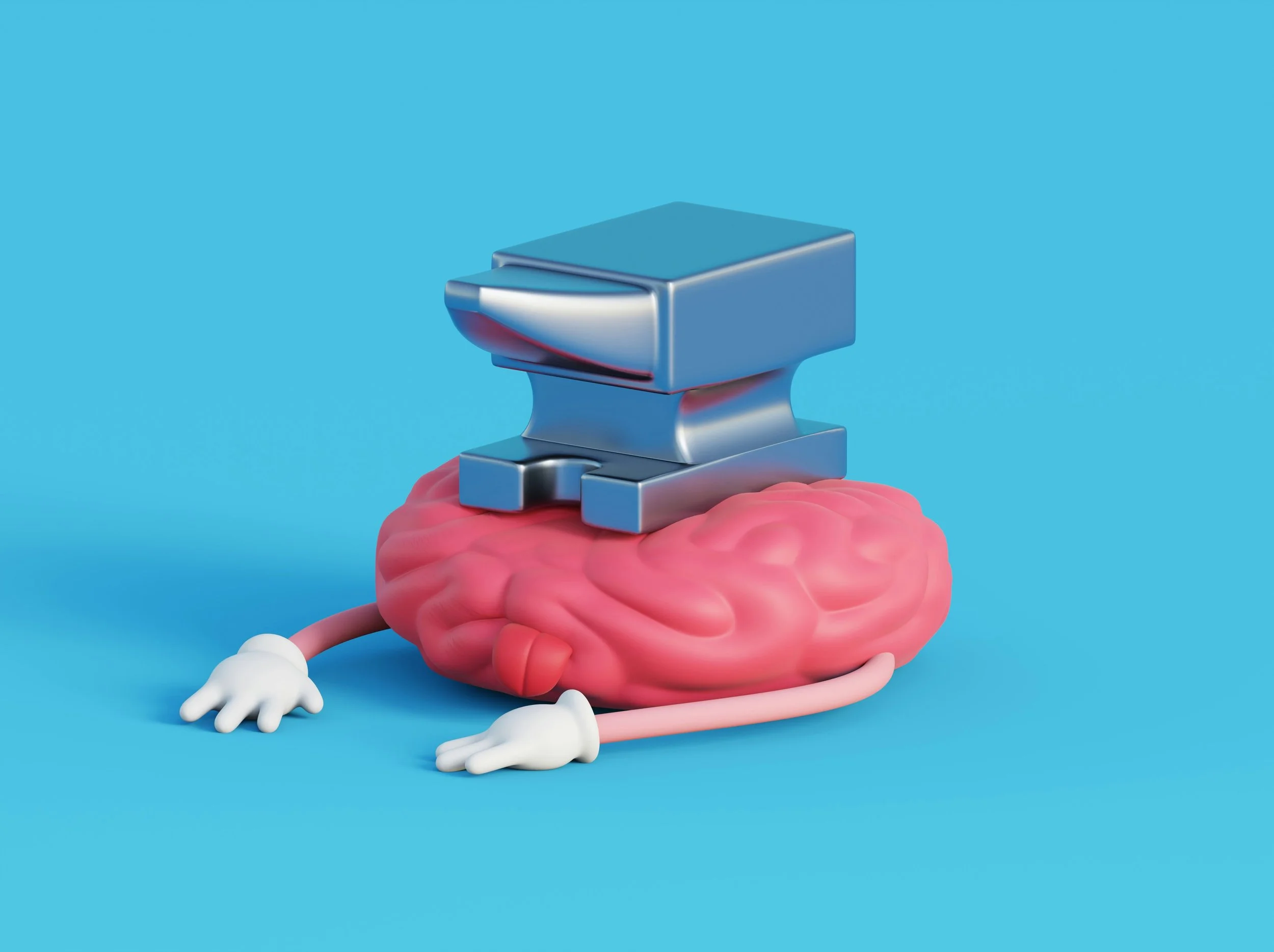
Ardian Pranomo via Unsplash
Let's not just manage anymore.
My dad used to ask me what I was chasing when I was stressed as a young executive. Ambition drove me, and stress kept me on edge. I mistook it for energy and fuel, believing it helped me stay focused and achieve my goals. It did—and it also caused burnout, which turned out to be a high price to pay for success.
Many take on that kind of stress in the pursuit of more. We live in a society that has normalized stress as part of success. The point, however, is not to make a villain out of stress, but to understand what we can manage, master, avoid, and embrace.
The difficult stress that many feel right now is uncertainty. Some can balance the possibility of uncertainty—the fact that we can shape and create our future by the choices we make every day. Others see the uncertainty we're living through right now as "more than normal future anxiety." I say it like that because the future has always been uncertain and always will be. However, right now we feel less in control of how to deal with it because it's not just day-to-day events, schedule changes, and broken plans. Most deal with stress by "doing something about it." But we have to be careful not to get stuck in activity without action. When the horizon feels obscured by external chaos, restlessness can turn inward as anxiety.
I worked with a leader recently who said, "I used to thrive on tight deadlines. Now they just make me freeze." That shift—from stress as fuel to stress as drain—is what so many are experiencing right now. It's not a failure. It's a signal.
When that happens, some numb out. Some break down. Some get paralyzed by unresolved fear—the kind we cannot fix, the kind where all we can do is feel it.
Some will say, "Don't worry about it" or "You care too much"—which can lead us to disconnect and disengage. Not because we stop caring, but because we simply cannot carry anymore.
Disengagement is often a capacity problem rather than a care problem. When we've carried too much for too long, the system goes offline. However, sometimes disengagement can also signal a deeper disconnect—when we've lost touch with why something matters or when the work no longer aligns with what we value. Getting back online is not just about motivation—it's about restoring capacity and reconnecting with care.
This is why Stress Awareness Month matters: not as another reminder to "manage stress," but as an invitation to build a more honest relationship with what stress is doing to us.
Stress That Sparks Motivation—Until It Doesn't
Stress can motivate us. People talk about the "rush" and how it sharpens focus.
It does because it increases cortisol. Now we need cortisol—it supports activation and focused attention. It gets us up in the morning and keeps us engaged. That's why we love our coffee: caffeine triggers the release of adrenaline and cortisol, giving us that energized, alert feeling. But cortisol is also a stress hormone. When it stays elevated for too long, the very thing that wakes us up can wear us down.
Here's the tipping point:
Good stress feels like nervous excitement or the curious awkwardness of trying something new. It's the stretch that says: I don't know yet, but I can figure this out.
Bad stress shows up when the challenge feels bigger than our perceived capacity—or when the time and resources we have don't match what's being asked.
The point isn't to label stress as good or bad. It's to cultivate awareness: What kind of stress am I in? What is it asking of me? What do I need to sit with, work with, or get out of it?
The Cortisol Trap
Stress can look and feel like productivity. It can masquerade as empowerment—until it becomes chronic.
At that point, many of us try to "hold the stress" in our minds. We attempt to think our way through it. But stress isn't just a matter of mindset.
It's our whole body—our whole system—that processes stress. Our nervous system can feel anything from being on alert to being under attack.
And while we humans are remarkably resilient, resilience is not permission to keep piling more onto our plates or carrying more on our shoulders.
Why Does It Feel Harder Right Now?
Understanding cortisol helps us see how stress works in the body. But what we're living through now isn't just biological—it's systemic, societal, and deeply personal.
The things we worry about are real:
AI and job disruption
Not knowing whether we're engaging with a human or a chatbot
War and instability
The economy
Climate change
And then there's the daily load—not just what's on the to-do list, but what's on the to-think-about list.
Liane Davey calls this "Thought-Load" in her new book, launching April 19th.
The Self-Care Mindset (my book) explores this same pressure—how thinking overload works and what tools can help you work with it.
It's the invisible cognitive burden of tracking, anticipating, worrying, remembering, planning, and carrying what might go wrong. The worry is real because what we worry about reflects what we care about.
When the Ground Keeps Shifting
When life feels uncertain, fast, and unsteady, stress is often treated as a personal failure. Our culture tells us we should be more resilient—that we should push through better, cope harder, or recover faster. That we should pick ourselves up, toughen up, and keep going. But that misses something important.
Stress from uncertainty and change isn't only about what's happening around us. It's also about what happens within us when our attention gets pulled in too many directions at once, when the strategy keeps changing, and when the horizon keeps shifting.
Going through uncertainty isn't about strength—it's about trust. Trust that we can figure it out, individually and together.
Here are some signs that stress is taking over:
Worry starts to feel productive. Urgency starts to feel necessary. Noise starts to feel normal.
Slowly, without realizing it, we lose connection to what matters. We end up losing momentum and motivation, which can lead to even more overwhelm, stress, and even depression.
A Different Conversation: From Stress to Awareness
This is why we need a different conversation.
Not just about managing stress, but about recognizing the signals within ourselves that tell us when stress is controlling us rather than us mastering it.
The most important shift is understanding how we use our minds—noticing where our attention goes, how our thoughts work against us rather than for us, and whether they serve what we care about or feed what we fear. The hamster wheel (repeating thoughts) and the pothole (getting stuck in fear, uncertainty, and doubt). Also known as metacognition. Because when the ground is shifting, the answer isn't to grip harder. It's about becoming more conscious of what's shaping us from the inside out and more agile in how we engage with our thoughts and emotions—ultimately reclaiming agency over how we use our mind to work for us.
The CARE framework has different applications depending on the context. For working through stress and uncertainty, CARE can guide your process: Connect to what matters, Ask better questions, Respond with intention, and Engage with care. It's designed to help you shift from reacting to stress to working with it—building trust in yourself and your capacity to navigate uncertainty.
PS—this is where The Self-Care Mindset book can be especially helpful. It describes how to do this with Power-Pausing™ and the CARE framework for asking better questions.
Care and Trust Are Interconnected
Care is our human intelligence. What we care about is our North Star. It helps us reset and realign with what matters. Power-Pausing™ is a great practice for that.
Trust is the infrastructure that builds momentum. It helps us stay steady enough to respond with intention rather than react from overload. The CARE framework helps build that.
Together, they help us get unstuck and give us the inner ground to navigate uncertainty. Without inner steadiness, stress hijacks our nervous system and our ability to think, engage, and act with care. With it, we can pause, recalibrate, and choose our next step with greater clarity.
That doesn't remove uncertainty. But it does help us meet it better.
PAUSE ON THIS:
A small practice for Stress Awareness Month and beyond: Remember that our human advantage is to care. No matter how overwhelmed we are, care is the core drive that helps us find our way through the noise.
Power-Pausing™ means to pause, take a few breaths all the way into your belly, and then ask:
What are my thoughts doing right now? Are they stuck on the hamster wheel—repeating the same questions over and over?
What is absorbing my attention? Am I stuck in the pothole of FUD—fear, uncertainty, and doubt—trying to get rid of how I'm feeling instead of using it as information to stay aware, not anxious?
Can I see what I'm working towards and stay connected to what matters? Or am I just caught in the loudest worry right now?
These questions help us come back to ourselves so we can think more clearly, relate more honestly, and move forward with intention.
In a world where the ground keeps shifting, staying human isn't about having all the answers. It's about staying connected to what matters while we find our way forward together.